January 24, 2026
Why Proper Keywords Matter (And Why Most Businesses Get SEO Wrong)
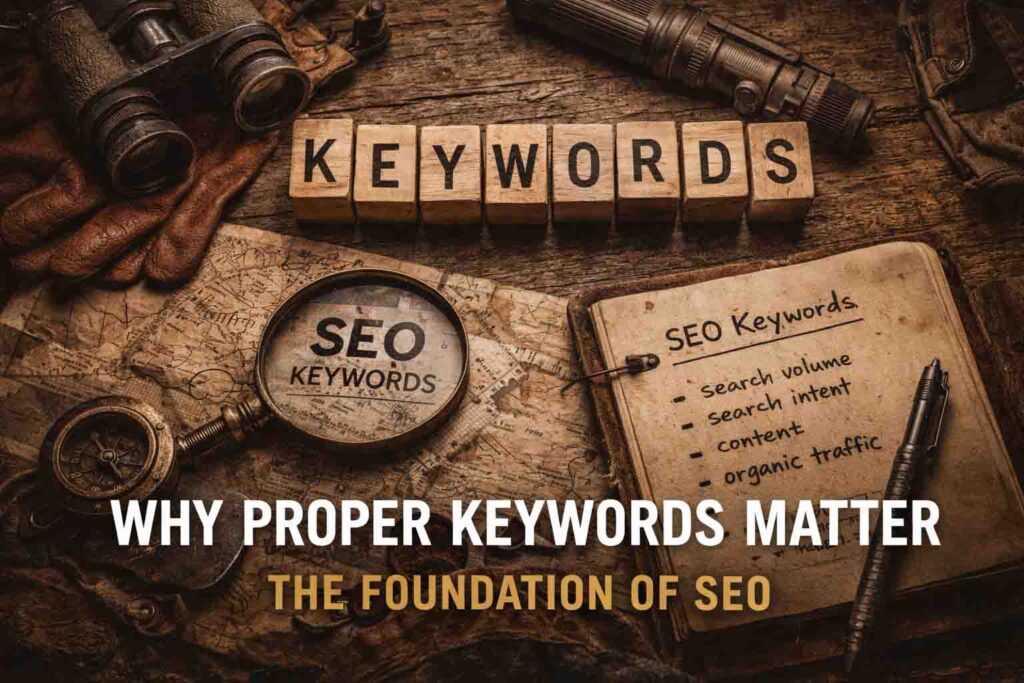
You can build the toughest gear on the planet.
But if no one can find it, you’re invisible.
That’s where keywords come in.
SEO isn’t magic. It’s alignment. It’s making sure the words on your website match the words your customers are typing into Google at midnight before a trip.
If your content doesn’t match their search, you don’t exist.
Keywords Are the Trail Markers of the Internet
When someone searches for:
-
“waterproof overlanding duffel bag”
-
“rugged camp storage solution”
-
“best gear bag for truck camping”
Google scans the terrain.
It evaluates your:
-
Headlines
-
Subheadings
-
Meta descriptions
-
Image alt text
-
Internal links
If your page clearly matches the intent behind that search, you get shown.
If it doesn’t, you stay buried.
Keywords tell search engines what your page is about. Without them, your site becomes noise.
Not All Traffic Is Good Traffic
There’s a difference between:
“duffel bag”
and
“heavy-duty waterproof duffel bag for overlanding”
The second search carries buyer intent.
The goal of SEO is not random traffic. It’s qualified traffic — the kind that turns into:
-
Inquiries
-
Add-to-carts
-
Purchases
-
Repeat customers
More visitors mean nothing if they aren’t the right visitors.
How Real Agencies Approach Keyword Strategy
Serious agencies don’t guess. They research before writing a single sentence.
They analyze:
-
Search volume
-
Keyword difficulty
-
Competitor rankings
-
Long-tail opportunities
-
Commercial intent
Then they identify keywords that are:
-
Relevant to the brand
-
Winnable based on competition
-
Valuable in terms of revenue potential
There’s no point chasing Everest if you haven’t climbed a hill.
Search Intent Mapping
Every keyword has a purpose. Some searches are informational. Some are comparison-driven. Some are transactional and ready-to-buy.
Strong agencies categorize keywords by intent:
-
Informational
-
Commercial investigation
-
Transactional
-
Navigational
Then they build content that matches that mindset.
You don’t aggressively sell in an informational blog post.
You don’t write vague content for a transactional keyword.
Match the intent. Win the click.
Building Authority Through Structure
Strong SEO is not built on random blog posts. It’s built on structure.
A well-optimized site typically includes:
-
A main pillar page
-
Supporting topic articles
-
Strategic internal links connecting everything
For example, a core guide on overlanding gear could be supported by articles about:
-
Waterproof duffel bags
-
Packing strategies
-
Camp storage solutions
-
Rugged travel gear comparisons
Each piece strengthens the authority of the whole system.
Google recognizes depth. Depth builds authority. Authority builds rankings.
On-Page Precision
Keyword placement still matters.
Strong on-page SEO includes:
-
Primary keyword in the H1
-
Supporting variations in H2s and H3s
-
Natural usage in the opening section
-
Optimized meta title and description
-
Descriptive image alt text
-
Clean, readable URL structure
This is not about stuffing keywords repeatedly. It is about strategic placement that signals relevance without sacrificing readability.
Common SEO Mistakes
Many small businesses:
-
Guess their keywords instead of researching
-
Target phrases that are far too competitive
-
Ignore long-tail opportunities
-
Write without considering search intent
-
Publish content and never update it
That’s like heading into the backcountry without a map.
You might move.
You won’t move efficiently.
SEO rewards strategy, not randomness.
SEO and AI: The Modern Edge
AI tools now accelerate:
-
Keyword clustering
-
Content outlines
-
Competitor analysis
-
Topic mapping
-
Schema generation
But AI does not replace strategy.
It amplifies it.
The brands winning today combine:
-
Smart research
-
Structured content
-
Clear intent alignment
-
Consistent publishing
AI simply helps them execute faster.
The Bottom Line
Keywords are not about tricking Google.
They are about clarity.
They help search engines understand your content.
They help customers find you.
They turn visibility into traffic.
And traffic into revenue.
You can build the strongest brand in your industry.
But if your words don’t match what people are searching for, you are building in the dark.
And growth doesn’t happen in the dark.
